
AI adoption in hospitals outpaces rules
Q4 2025 · Oct to Dec 2025
Key events this quarter
- Orion Health launched Concerto AI, a modular clinical platform to embed natural-language search and early risk detection in hospitals.
- Federal government committed 100 new university GP places to strengthen the rural and general practice workforce long term.
- La Trobe University’s Care Economy CRC secured A$129 million to modernise aged, disability and mental health care technologies.
- NSW expanded hospital-in-the-home with A$31.4 million, adding regional sites and wearable remote monitoring devices.
- UNSW opened a A$1.5 billion health hub to speed research translation and industry partnerships in Sydney.
- A regulator issued a A$5.8 million fine for a data breach affecting about 223,000 people, highlighting digital-security risks.
Orion Health’s Concerto AI, NSW’s A$31.4 million hospital-in-the-home expansion, La Trobe’s A$129 million Care Economy CRC and the federal 100 GP places commitment defined Q4 2025 as the quarter when technology, workforce and procurement collided.
AI in hospitals
Orion’s Concerto AI and local radiology deployments showed hospitals will buy modular AI that fits existing systems not full replacements. Buyers gained leverage because procurement can now demand interoperable models. Vendors that cannot demonstrate clinical performance or explainability lost negotiating power. The forced decision: hospitals must choose between rapid pilots and formal clinical validation programs.
Primary care leverage
The federal 100 GP places and faster GP prescribing and MRI access moves put primary care at the centre of capacity relief. Primary care networks and clinics gained bargaining power with payers and state planners. Specialists and tertiary outpatient services face pressure to redesign referral workstreams. Training and placement logistics are now a procurement and workforce priority.
Hospital at home
NSW’s HITH expansion and wearable monitoring deployments crystallised community care as a procurement category. Health districts that scale remote monitoring will reduce admissions and secure funding; smaller providers without device integration face operational risk. The practical constraint is not technology but rollout capacity: staffing, connectivity and supply contracts determine who benefits.
Caution or constraint
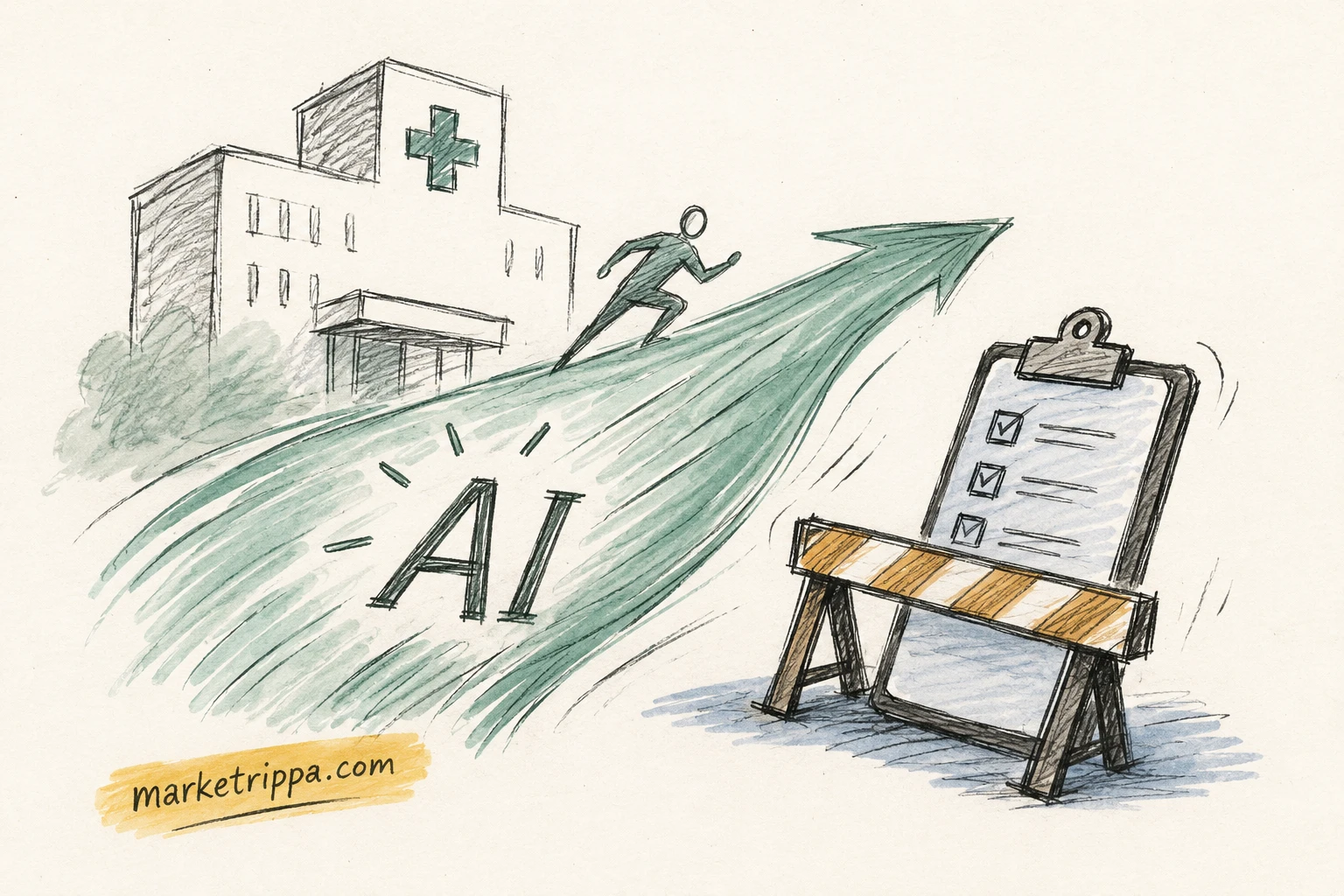
Q4 made clear that regulatory and security gaps are the choke points. Calls for published AI performance data grew louder while a A$5.8 million breach fine reminded leaders that digital projects carry material compliance risk. The tension is real: rapid AI adoption improves efficiency but increases exposure if governance, data security and clinical oversight are not in place.
What to watch next quarter
- A national clinical AI framework will begin to take shape, Watch for: publication of federally endorsed safety standards for clinical models, Wrong if: states publish separate, conflicting guidance.
- Hospital-in-the-home funding will scale beyond pilots, Watch for: NSW or other states awarding further HITH contracts with remote monitoring, Wrong if: no new procurement and ED admissions keep rising.
- 100 new GP university places will start to ease rural shortages, Watch for: published uptake and rural placement rates for the first intake, Wrong if: enrolments undershoot and visas still required.
Methodology: This quarterly brief synthesises the source coverage from the period below and adds editorial framing for Australian health operators. It is not medical advice and should be read alongside the original reporting.